Tuesday, February 26, 2013

All Signs Point To Yes


When I was in elementary school, my best friend had a Magic Eight Ball. We asked the oracle important questions like whether on not we should watch Love, American Style that night, and if certain boys we liked did indeed like us back.

 We believed the eight ball when we received answers like: It is decidedly so, and all signs point to yesWe complied when it said: Concentrate and ask again, and reply hazy, try again


But, when it answered: My sources say no, and don’t count on it, we shook and shook again until we got a without a doubt or as I see it, yes.

For the last year and a half, my husband and I have been looking into a future as blank as the blue liquid inside the Magic Eight Ball. Leaving his job, selling our home, moving nine hundred miles from our family and friends: we’ve been moving forward, trusting in God and intention as if the eight ball told us: You may rely on it. In the matter of his work—the job he was pursuing in California was withdrawn—well as the eight ball says, you will have to wait.


On my end, everything is working out. Little events seem to confirm that I'm on the right path. Two weeks ago, I came across a merlot-colored office chair sitting outside a non-profit office building with a note taped to it: Free.

I checked it out: Smallish and armless, with a wooden frame and wheelbase. The upholstery was in great shape, no stains or rips. I sat in it. The cushioning was still supportive with no signs of wear.

It’s exactly what I wanted for my writer’s studio, but didn’t want to spend hundreds of dollars for. I carried the chair a block to my car. It’s in the studio now, waiting for the writing guest who will arrive Saturday all the way from Utah to spend a week working on his Sci-fi novel.

After he leaves, I will host a copy-editor from Bavaria on a three-week working vacation to the island as she visits family. Last week, a traveling nurse from Michigan stayed for seven days, commuting to an ER room in Seattle twice for 12-hour shifts.

In between, have been hosting one and two night guests: an MFA student on Valentine’s Day, a couple traveling to Seattle for a business meeting, another couple celebrating the husband’s fiftieth birthday.

I Tigger around the house with each reservation request I receive, bouncy and giddy. Did my vision really become reality? I’m wowed, but I’m not unique: People pursue their dreams and passions everyday and are filled with creative energy in the process.

 The creative high that zings through me when someone chooses to stay at my writer’s retreat is the same feeling I had when I first began writing, when I first began preaching and planning worship, when my husband and I first decided to have children.

 I’ve been hibernating this past year, not as withdrawal, but as renewal. I’ve learned to feel comfortable in solitude, to accept myself outside of any roles or accomplishments in the community, to grow in internal spaciousness, to spend time with my husband, learning new skills from him, increasing in my appreciation of his genius, but not clinging to him for my self-definition or happiness.

Now that our writer’s retreat is launched, I’ve looked up to see the rest of our home still under renovation needing my attention, and beyond our walls to begin to discover where I fit and what I can contribute in this geographic place.

I began to think about what else fed me: holding the door open for creativity, leading writing workshops. But how do you lead workshops when you don’t know anyone? I attended a half-day workshop on mindfulness meditation led by a Christian spiritual director. We clicked. I asked if she’d be interested in co-leading a meditation/writing day in the future. She said yes.

A few days later, an organizer from Field’s End, a group that offers writing classes through our local library (I hang their posters around town and set up chairs for monthly presentations), asked if I’d like to lead an open writing group through the library.  It’s funny you should ask, I told her.

It’s been a long, happy winter. In a rare moment, the sun shines. I grab my camera and snap pictures: Crocus push up through the lawn, purple and lavender, and tulips and daffodils sprout green shoots around the yard, everything emerging, like me ready to bloom where they’re planted.


Do I belong here? The Magic Eight Ball answers yes, definitely.


Tuesday, February 12, 2013

Pursuing Justice and more

I interrupt my regularly scheduled blogging about heaters and job hunting, to tell you about some new writing. In the midst of remodeling I have managed to send out a few stories and essays for publication. Mostly they've been declined. A few have been accepted.

You'll find a few new links in the sidebar for my latest pieces online (and if you're on my email list, you already know about them).

Today I want to let you know about two books I'm honored to be included in:

The first is Pursuing Justice: The Call to Live and Die for Bigger Things. It's a highly readable book, filled with stories about justice in every day life. Reading it reminded me that justice isn't something that exists outside of us for the courts or governments to administer, it gets to the core of who we are and how we live. The book is published by a Christian house, but I think it engages a wider audience.

The author is Ken Wystma, and he has been greatly aided by D.R. (David) Jacobsen, who was in my graduating class at Seattle Pacific University where we received MFAs in Creative Writing. David, who edited the book, was kind enough to include a poem of mine.


I also have a story appearing in The California Prose Directory later this spring. This anthology features   both fiction and nonfiction all set in California. The editor is profiling all the contributors as he prepares to launch the book. I enjoy reading anthologies, and the first thing I head to is the author bios.

I'm enjoying the opportunity to read about the writers before the book is in my hands, and I'm humbled  to be included in this gathering of very talented writers. The profile also includes a Q&A about the contributors' experience with California. Mine appeared today.

Now I'm going to paint an accent wall.

Sunday, February 3, 2013

If You Build It They Will Come, But How Much Should You Charge?


I’m changing sheets and towels, dusting, putting away dishes, and vacuuming in my writer’s retreat, and in my mind hear James Earl Jones straight out of Field Of Dreams: “If you build it they will come…. They most certainly will come, Ray.”

I substitute Cathy for Ray, and look at this beautiful studio, this vision realized. I’m blessed to have had writing guests three weekends in a row, and two-thirds of them I’d never met before, thanks to listing on airbnb.com.


Field of Dreams ends with a steady stream of cars lining the back-roads of Iowa. Here’s what we don’t see: neighbors complaining, traffic congestion, parking shortages, zoning regulations. Ray will plow up more corn to add parking, wondering how much must remain for Shoeless Joe to appear. He’ll rent port-a-potties and more bleachers, build a ticket booth and concession stand, keeps records on Quicken, and fork over taxes to the municipality, state, and feds because he was listening, living out his call.


I believe in the transformative power of both retreat and writing. In my own life, leaving home and responsibilities (particularly for the Mercy Center in Burlingame California, where I spent forty days over two years in Spiritual Formation) released my creativity to flow uninterrupted by routines and chores.
The labyrinth at the Mercy Center, Burlingame

I was inspired by the opportunity to explore a place that wasn’t mine and find its gifts. This is my vision for the writer’s retreat I now host: to provide space that is welcoming, comfortable, yet challenges and encourages the creative genius in each guest to come forth, to delight in self-expression, and to be inspired to continue the good work they began here.

It’s a lofty goal, but with each guest who writes, there is more creative energy and intention gifted into this room. I contribute to it when I’m cleaning, wishing well the guests who have left, readying for the ones to come in the tasks of emptying trashcans, snapping sheets, hanging towels, lifting up my guests' creative endeavors, breathing a generative spirit of peace and well-being into this room.

The dining nook in the retreat studio

How can I put a price on this? I would love to invite everyone without charge because I believe we should all have the opportunity to leave home, squirrel away with a pen and paper, and discover.

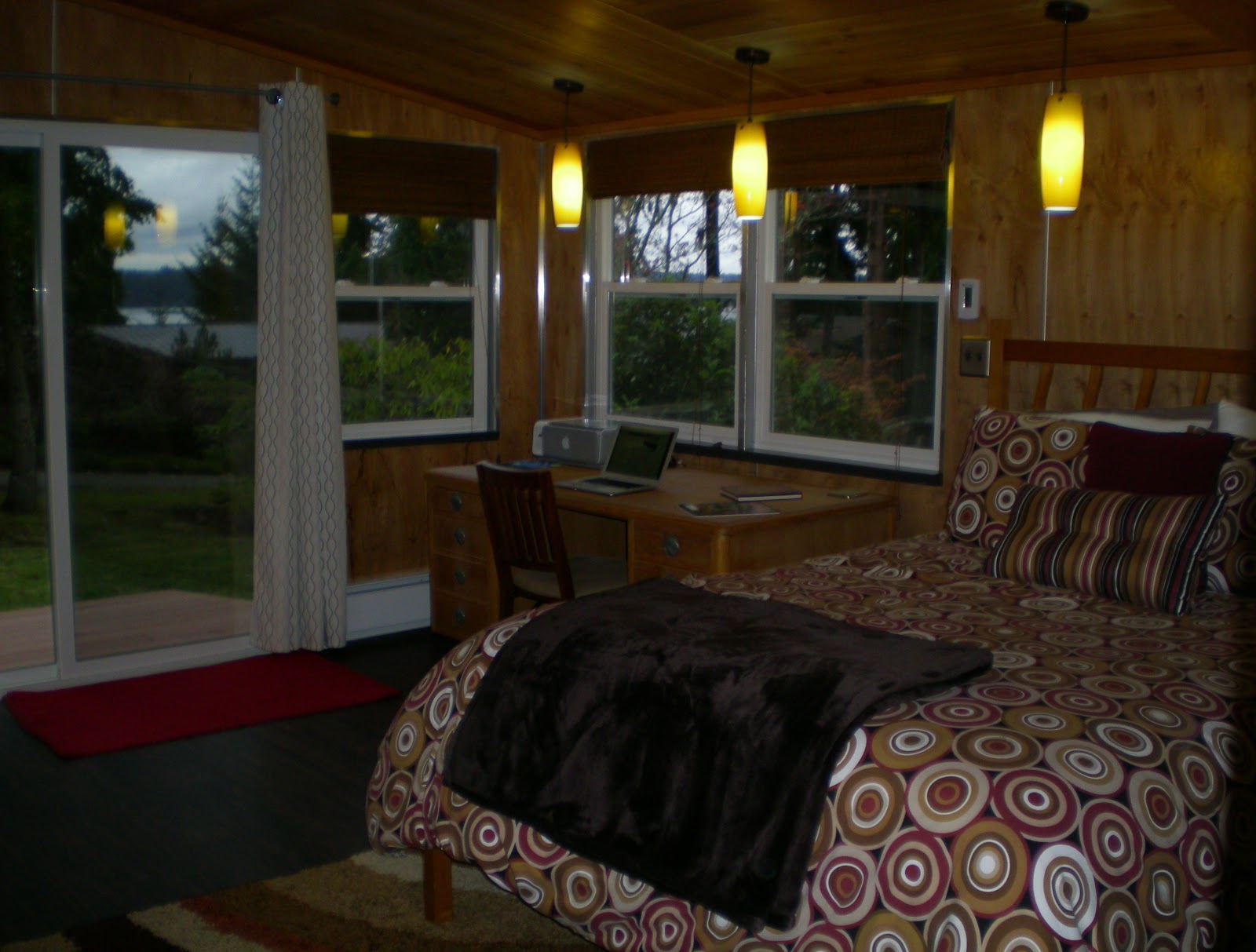
That said, my husband and I have invested thousands of dollars in transforming this room from a freezing pale-green non-descript room with rusted plumbing and a metal shower stall, into a sanctuary of wood, color, warmth, and views. It’s an investment we won’t recoup until we sell this house, which we hope won’t be for a very long time.

The room before we bought the house. Only the desk remains.

Now I’m a business owner, and the state and city want their excise and lodging taxes, and my guests cost money: taxes, water, electricity, toilet paper, dish soap. And there is my time, which as a writer (and former lay minister and classroom volunteer) I am used to giving away, to be paid in copies and compliments.

My husband, in his professional life, has been responsible for million dollar programs and budgets. He is the one reading the tax codes, installing electric sub-meters, coding expenses, and separating out capital improvements.

I explain to him that webreserv calculates some taxes, airbnb none, that webreserv charges no fees, airbnb some, and he explains the discrepencies in tax liabilities for me. He doesn’t tell me how much to charge, only that my rates should differ on each site.

  
My mother-in-law, at the age I am now, opened a bed and breakfast inn in San Francisco. My husband and I helped restore the mansion on weekends, and helped market it too, buying our first computer and performing mail merges, sending out hundreds of invitations and announcements. Getting the word out was difficult and costly. I’m fortunate to launch my small business in these days of free social networking, but there are still many expenses.  

The former Warner Embassy in San Francisco

I’ve checked what other island B&Bs charge, and how much folks charge to rent the cottages in their backyards, and it’s not cheap. Unlike large hotels and chains, we have no economies of scale. Like Ray in Field of Dreams, we built it and they have come. They have come in large part I think, because of the introductory rate I’ve offered this first month of my business.

Unfortunately, that rate is not sustainable: we’re paying to have guests. My rates must rise and I know that means some writers who’d love to stay here won’t be able to. As one used to offering my skills and talents as a ministry—at no cost and open to anyone—it’s difficult to think like a businesswoman.  Do most business owners wonder how little they can charge to break even? I do.

Several times in California, when my husband was employed and we didn’t do everything ourselves, we hired a contractor. His bids and invoices always had a line item for “overhead and profit” calculated at fifteen percent. He was a great builder, honest, ethical, and recognized that he deserved to make a profit to stay in business. He wasn’t the cheapest contractor around, but he was the most conscientious and we were happy to pay his fifteen percent.

Now that our retreat is built (we’re still busy remodeling the rest of the house) and our focus shifts from construction to hospitality, I will continue listening for leading—even if it’s not God or James Earl Jones speaking—consulting my conscience, and attending to my guests and their needs, giving my attention, and living out my intention to provide a meaningful retreat.

All this at a rate I hope my guests are happy to pay.


Tuesday, January 22, 2013

The Heat Is On


The heat is on. And it costs $4.99 a gallon. We heat our house with oil, which is really diesel gasoline with dye added, which means in a pinch, we could syphon some from our underground tank for the UPS driver if s/he ever ran out of gas delivering our Amazon Prime orders. But in a temblor, it means our fifty-sixty year-old underground oil tank could leak, contaminating soil, and possibly groundwater.


Our oil heater


 We live on an island so it makes sense we can’t heat with natural gas: propane, oil, and electricity are the local options. We’re fortunate to have central heat, and our oil burning forced air unit is not quite ten years old, but we still use more than a gallon a day. Heat is one thing the former owners didn’t skimp on. We also have a pellet stove upstairs, and a wood stove downstairs.


The pellet stove upstairs


The wood stove downstairs

Hot air rises, and the vents in our ground floor are in the ceiling, so it’s about fifty-eight degrees near our windows (by the windows on both floors actually, they’re old, and made double pane simply by the addition of a storm window over a glass pane). I know this isn't really cold, but to be comfortable indoors without wearing a robe over my clothes, drinking hot tea, and running the vacuum to stay warm, I prefer sixty-eight.

We also are in the process of making a master bedroom down below, combining unheated basement with an existing bedroom.

All this has brought heat to mind. How best to warm our new room, and if we’re adding heat to one room, how hard is it to re-think the rest of the house? Why not stop heating the house with dead dinosaurs and use cheap clean electricity only?

The answer: money.

Back when we had money, we invested in a hundred thousand dollars of solar panels to heat and cool the new home we built in California, sure that we would live there long enough for our investment to pay for itself. It didn’t. In fact we lost everything we put into infrastructure: bringing water and electricity to the property, installing a non-standard septic system, building special earthquake fencing to stop falling boulders.  There’s more to that story, but we’ve taken from it a moral:

Be careful how much we invest.

We were careful to choose our fixer upper in a desirable/waterfront neighborhood so that if we sunk a hundred thousand dollars improving the house, we still wouldn’t overbuild or overdesign for the neighborhood like we did before. We also thought Kevin would have a job by now to fund our remodeling.

He keeps looking for paid employment and we factor square-foot costs and resale value in the decisions we make daily, tackling deferred maintenance, and making improvements that suit the home’s original design as well as our preferences.

Budgets are always good restraints in building. And, it turns out there are others equally as effective as money in our decision-making:

Hazard mitigation for one: We can’t just stop using our oil heater, we would need to have our 500 gallon oil tank drained, dug up from the front yard, and officially decommissioned.  Ka-ching!

Unconditioned living space (no heating or flooring other than cement) for another; we didn’t have enough of it to install the super efficient (and super pricey) ductless heat pumps that are the current heating modality of choice in this region.

Wall space being another. Where can you get forty-eight or seventy-two inches along a baseboard for a Cadet hydronic heater—which we used in our writers studio—four or six feet of wall that can’t also have a bed, dresser, or bookcase against it? That sort of interior real estate is more difficult to obtain than cash.
Cadet hydronic baseboard heater in writers studio

For now, we’ve settled on becoming a hybrid house, combining oil heat—thermostat set to sixty degrees—with supplemental electric heaters in each room, that we will turn on for comfort as we are using them.

Kevin contemplated building platforms in the master bedroom to house our closets and dressers above the heaters. But I didn’t relish the idea of standing on a stepstool to reach my heaters. So we’ve been testing out options.

By testing I mean that Kevin does hours of internet research—checking watts, dimensions, operating manuals—places orders online for heaters not in-stock at Home Depot, buys several at Home Depot, and we open boxes, inspect the contents, test them out in various locations.

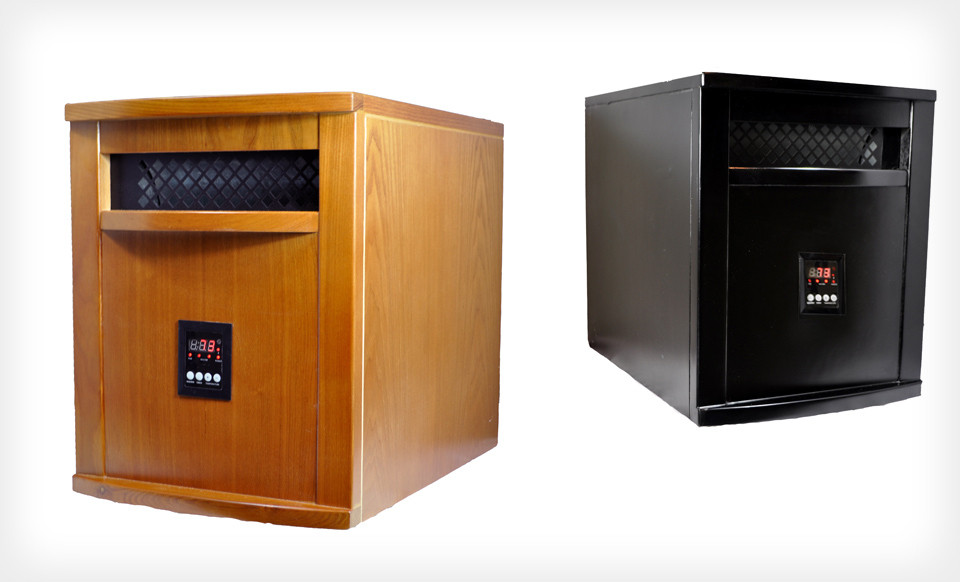
I feel like Goldilocks. The great bargain from Groupon, although small and square enough to fit nearly anywhere and double as an end table, was too noisy, on par with our pellet stove, which though warm, is loud.
Noisy Groupon heaters

The Cadet hydronic series was too long to fit our walls. The Smal can be mounted high on the wall, but then I can’t reach the controls.

I can't operate the control when this heater is wall mounted

A second Cadet model is shorter, could fit it on our floor-to-ceiling windows upstairs.
Another, sleek and black, that looks like a flat-screen TV is coming and Kevin imagines engraving eagles, orcas, and Mount Rainier on its glass panel. I say this will void the warranty, but he disagrees and offers to email the company to find out.

TV on left. Heater on right. Clearly no one lives in this room.

Attention to detail is one of the many qualities I love in my husband. Nothing is too mundane for his full mental acuity and consideration. He loves to research, collect options, and mull them over. This might lead a person to think he can’t make up his mind. But that’s not so.

Thirty years ago when we were dating and couldn’t decide what to do one evening, I asked, “Will we always be this indecisive.” His answer was swift and emphatic: “Yes.” 

And so it is. We spend tens of hours contemplating how to heat our home, as if making a decision on par with buying the home itself. And it just might be. The options we select will become part of this home, impacting not only us (and by extension the environment) but all those who will warm themselves under this roof—whether it is ours or not—for the foreseeable future.

A big responsibility. No wonder we have trouble choosing.

Saturday, January 19, 2013

I'll Cut You Up, Buttercup


The sky is pinking, a sunset when there has been no sun. It’s time to return indoors from my two-hour gardening foray.

I step into the laundry room and begin to doff the layers I donned to enjoy the outdoors: waterlogged supposedly waterproof gardening gloves, thin nitrile gloves underneath them, rain jacket, sweatshirt with hood, bandana tied on my head, waterproof hiking boots, rain pants. I still wear: long-sleeved thermal top, short-sleeved undershirt, sweatpants, winter-silk bottoms, and thick knee-high socks.

It’s the third week of January, the weather is gray, it’s forty degrees, and it hasn’t rained in a week, but already the buttercup has thrust perky green stems with toothy leaflets inches above the soil in dozens of clumps in the garden bed next to the garage, even sending out stolons (runners) to root in an ever expanding arc.

Last year, when I was new to the island and the Pacific Northwest, I’d never seen buttercup, and even though a neighbor told me it was a weed I should eradicate (not terrible enough to be classified as noxious in Washington, but rather a weed of concern), I didn’t heed her advice.

Creeping Buttercup

I welcomed the first signs of green in a new-to-me deciduous and dormant garden and wanted to see what this new-to-me plant would become.

And I thought, rightly, that buttercup had to be cute, because of that 1950s song. It is cute, but invasive, like the common cold. Buttercup and bindweed (the morning glory that I blogged about this summer) are my garden nemeses. And like the best comic book hero, now that I know who they are and what they’re capable of, I’m out to destroy them.

My raspberry bed overrun with blooming buttercup and bindweed

Maybe not in the rain, but on a regular winter day, why not bundle up, set aside my computer—editing blog posts for Image’s “Good Letters,” editing my first book for a Good Letters blogger, updating my writers retreat listing in airbnb.com—and kick some plant?

I walk in the house a little dirty, but feeling successful, until I decide to read about buttercup. Even though I’m supposed to be the hero in this story, vanquisher of non-native-conquistador species, I lack the superpowers needed to win the war against an enemy whose seeds can remain viable in the soil at least twenty years, and up to eighty, and can grow new plants with tiny root-bits left in the soil.


Given those stats, I should give up, but this is what people do: undertake crazy and ridiculous endeavors with little or no guarantee of long-term success. We call it vision, or having a dream, or being stubborn.

And so you will find me gardening in and out of season, attempting like centuries of men and women before me, to assert my limited knowledge and prideful will against nature’s wily and superior ways.

I tell myself I am restoring what was meant to be, or it least clearing the soil for what is—the foxglove, azaleas, and wisteria that Mr. Nunamaker (the former owner of my house) planted—to live without buttercup strangling it.

 But as in so many other instances, people began this problem. Buttercup is a European plant, and some immigrant tucked a happy yellow flower in a hatband and boarded a ship to America, and another one wrapped a plant in burlap and slid it on a covered wagon: seemingly innocent actions still rippling with repercussions.  


For I am “man” and I exercise my dominion: my plan, my scheme, my idea of a garden or a life, believing I know best what should occupy a place, believing that my desires are more legitimate than the actions of seeds, birds, wind, and circumstance.

How little I know.